Gary Inbinder's second novel, The Flower to the Painter, transports the reader into the elegant, commercialistic art world of late nineteenth-century Europe. Through the sharp eye of protagonist Marcia Brownlow, we float along the canals of Venice, travel by train through the Alps, and meet John Singer Sargent, Leighton, Whistler, and other memorable painters of the time. We even exchange sketches with Renoir in Montmartre.
Marcia Brownlow was down on her luck when she came to Europe as a governess, a position that quickly became intolerable. Pleading her case before the wealthy aunt of her best friend, Marcia is faced with a risky but lucrative proposition. She accepts the challenge of working for a famous writer not as Marcia but as her brother, Mark. The combination of Mark's gender advantage and Marcia's artistic talent quickly propels her into a promising career. Her "unnatural" bent toward women allows to her romance her wealthy patronesses with pleasure, but only up to a certain frustrating point. Which will Marcia choose: her love or her art? Does it have to be one or the other?
Inbinder's intuitive sense of the sights, sounds, and smells of the period help the reader to feel that Marcia's conflicted, quixotic adventure is their own. It's not easy for a male author to convince the reader that he's inside the head of a female narrator, but even that metaliterary tension contributes to the success of this delightful novel.
In short, Inbinder's vivid language and memorable characters immerse the reader in the nineteenth-century European art scene. This book is a must-read for any art history fan as well as readers interested in a satisfying, gender-bending romance.
Tune in again on Wednesday for a compact but insightful interview with the author.

Monday, July 11, 2011


Sunday, July 10, 2011
Six Sentence Sunday: Death at the Wedding
We're back to six sentences from the wedding celebrations in tenth-century Burgos in The Seven Noble Knights of Lara. I feel especially vulnerable about this snippet because it's the first death scene in a book that will have many more. It has to be right. I'm kind of liking the oblique way it's portrayed, but that may not be right for the inciting incident of a family revenge saga. What do you think? I'm open to suggestions. I may have to set this scene aside until after I finish the entire first draft, but I appreciate your comments so very much! Thank you.
By the time we get to this scene, we've seen Álvar Sánchez's charming self spend huge amounts of time with his cousin, the bride, doña Lambra, so any affection the reader has for the character should make this all the more heart-rending. After this, we have a lot of reaction and turmoil.
To set it up: there has been a contest of the knights' prowess on the riverbank, after which male egos have raged out of control. (The sentences are long -- I'll break them up after SSS treatment.)
I've had a suggestion for hearing his skull crack, but I'm feeling squeamish about that possibility. If a guy was trampled by a horse and we saw his teeth fall out and blood everywhere, I would assume the worst without listening for the crunch of bones, but maybe that's just me.
Thanks again for stopping by my blog! Check out the other snippets here.
Tomorrow and Wednesday: Gary Inbinder's The Flower to the Painter.
By the time we get to this scene, we've seen Álvar Sánchez's charming self spend huge amounts of time with his cousin, the bride, doña Lambra, so any affection the reader has for the character should make this all the more heart-rending. After this, we have a lot of reaction and turmoil.
To set it up: there has been a contest of the knights' prowess on the riverbank, after which male egos have raged out of control. (The sentences are long -- I'll break them up after SSS treatment.)
* * *
Gonzalo drove his fist into Álvar’s face so hard that he collapsed at the feet of his horse, which reared noisily, bringing its sharp hooves down on its rider’s flesh again and again until Muño Salido seized the reins and led it, still kicking, away. Álvar’s teeth bounced and rolled on the soft earth or landed on people’s pointed shoes like fallen pebbles. Shining blood sprouted from under his body and raced outward, covering the ground with a steaming red plague. Doña Lambra let out a scream much louder than any of the lance blows had been on the scaffold as Justa dropped to her knees and took Álvar’s bloodied head in her hands. The little page stooped and touched Álvar’s limp hands and still chest. They looked up at doña Lambra and shook their heads.
* * *
Thanks again for stopping by my blog! Check out the other snippets here.
Tomorrow and Wednesday: Gary Inbinder's The Flower to the Painter.
Friday, July 8, 2011
Weather Updates
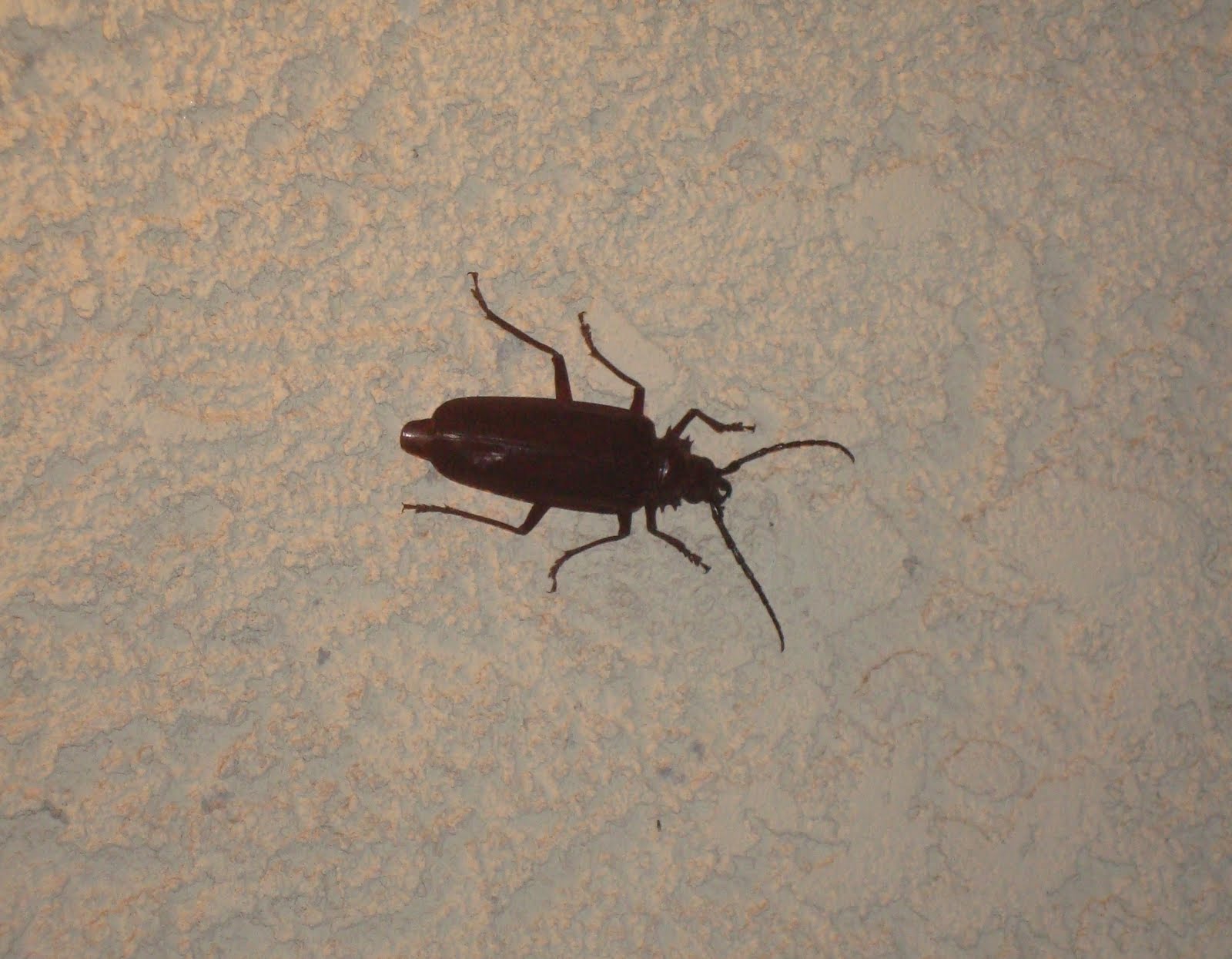
July third, at about 10 pm, my husband and I got to watch a monsoon burst together. We were joined by an Arizona native:
 He was objectively three inches long.
On the fourth, my husband had to go to work for a few hours in the afternoon, so I had to watch this one by myself. It's hard to hear over such pattering, but there's thunder throughout this video.
Feeling soaked yet? We aren't. Even with bursts like this, which last about 30 minutes, the ground is mostly dry in three hours. Astounding place, this Arizona. We've been lucky because we haven't suffered from power outages resulting from falling trees, and we're nowhere near a place where landslides would be a problem. My husband had to take a different route home, because his usual road goes right through a "wash," basically a channel like a dry riverbed kept clear to collect all this water and send it out to sea, carrying silt, trees, and unlucky travelers with it. My main thought is: Hooray for Mother Nature, for making this place unique.
On the fourth, my husband had to go to work for a few hours in the afternoon, so I had to watch this one by myself. It's hard to hear over such pattering, but there's thunder throughout this video.
Feeling soaked yet? We aren't. Even with bursts like this, which last about 30 minutes, the ground is mostly dry in three hours. Astounding place, this Arizona. We've been lucky because we haven't suffered from power outages resulting from falling trees, and we're nowhere near a place where landslides would be a problem. My husband had to take a different route home, because his usual road goes right through a "wash," basically a channel like a dry riverbed kept clear to collect all this water and send it out to sea, carrying silt, trees, and unlucky travelers with it. My main thought is: Hooray for Mother Nature, for making this place unique.
Wednesday, July 6, 2011
Best Kept Secret by Amy Hatvany
I normally shy away from "issue" novels, but Amy Hatvany's compelling language and accurate characterization, so firmly rooted in the real life of thousands of people, drew me along with such a firm grasp that I couldn't put it down. Through the magic of her honest writing style, the reader comes to genuinely like the main character, Cadence, as she tries and fails to cope with tremendous pressures. We sympathize with her when she slowly realizes that she alone cannot maintain a writing career to earn money and raise her son the way she wants to without help. But she feels utterly alone, in spite of the support of her beloved sister and the moms in the various groups she takes her to, who seem enviably "together," with no problems they can't handle. As she indulges too much in the relief of alcohol, her inevitable downward slide is just as surprising to the reader as it is to Cadence. Even as she researches the symptoms of alcohol addiction on the internet, she reaches rock bottom and loses it all when her ex husband takes their boy and sues for custody.
Although most of the readers of this book will be "normies," who don't drink too much, Hatvany's vivid exploration of Cadence's thought processes and the revulsion she feels even as as purchases and pours the wine and vodka forces us to see how her predicament is a possibility for so many everyday people who can't ask for help for whatever reason. This novel will help anyone with any kind of addiction to feel less alone, and anyone who knows an addict to learn what they can do to help.
In short: beautifully written, realistic, by a sensitive writer, and highly recommended.
Although most of the readers of this book will be "normies," who don't drink too much, Hatvany's vivid exploration of Cadence's thought processes and the revulsion she feels even as as purchases and pours the wine and vodka forces us to see how her predicament is a possibility for so many everyday people who can't ask for help for whatever reason. This novel will help anyone with any kind of addiction to feel less alone, and anyone who knows an addict to learn what they can do to help.
In short: beautifully written, realistic, by a sensitive writer, and highly recommended.
Monday, July 4, 2011


Sunday, July 3, 2011
Six Sentence Sunday More, More, More, Sail To Italy!
Thank you for all the wonderful comments last week! You're fabulous!
Check out the other six sentence excerpts here.
And happy July 4th! In Arizona, we're not supposed to set off fireworks, and I hope people obey the law, since half the state is on fire already.
I'm celebrating the fact that Sail To Italy and Sail From Italy are independent from the digital format and can be purchased in a gorgeous paperback. ;) Still in both -- really inexpensive -- digital formats, too!
In this scene from Sail To Italy, Princess Noreena has set the terrifying Pirate Pierre the unexpectedly difficult task of tracking down her long-lost second cousin, who probably lives in Corsica. Witness the struggle and its silly resolution!
Check out the other six sentence excerpts here.
And happy July 4th! In Arizona, we're not supposed to set off fireworks, and I hope people obey the law, since half the state is on fire already.
I'm celebrating the fact that Sail To Italy and Sail From Italy are independent from the digital format and can be purchased in a gorgeous paperback. ;) Still in both -- really inexpensive -- digital formats, too!
In this scene from Sail To Italy, Princess Noreena has set the terrifying Pirate Pierre the unexpectedly difficult task of tracking down her long-lost second cousin, who probably lives in Corsica. Witness the struggle and its silly resolution!
* * *
Pierre was going mad. He resorted to the very last hope.
“Pardon me, ma’am, but do you know an Antonio Carlucci?” Pierre asked without much hope in the town square.
“Why, yes. I’m meeting him here, today, now. What do you want of him?” said the nice lady.
* * *
Next week: more from The Seven Noble Knights of Lara! ¡Olé!
Friday, July 1, 2011
Memoirs for Monsoon in Arizona
My most vivid memory of Arizona before my husband and I came to live here was a few seconds during one of my family's road trips. We were between the car and the restaurant and in the distance, over the mountains, beyond the palo verdes and creosote, a black cloud rumbled with sudden flashes of white electricity. At the time, I knew with the firmness only a child can feel that California was the only place to be. The dry electricity falling out of the sky to zap innocent girls was much more sinister to me than the natural, expected occasional realignments of the Earth that were earthquakes.
I object to the use of the term "monsoon," which I became familiar with in the context of the truly incessant deluges that happen yearly in Bangladesh and Southeast Asia. Nothing that evaporates in the breaking dawn should really be compared to what happens there, even when there are mudslides and the washes fill up and drag debris and silly people's cars away to the sea. "Rainy season" would be more accurate than "monsoon," and perhaps we could go as far as "moister than usual season," for what's happening now, or the desert climatologists could advocate better for whatever technical term they've developed.
Because the Sonoran Desert at its wettest -- I'm guessing -- won't even approach a typical day in coastal Oregon (the location of my biggest fans). (If you're a fan, tell me where you're located!)
Subscribe to:
Posts (Atom)