Subscribe to Jessica's exclusive newsletter

Subscribe to Jessica's newsletter

* indicates required
Showing posts with label beauty. Show all posts

Monday, January 29, 2018

Oviedo: Medieval Paint and Alfonso II's Religio-Political Statement

San Julián de los Prados, Oviedo
All photos in this post 2017 Jessica Knauss 
Oviedo was a hugely important urban center in the early Middle Ages, a focal point for the largely rural Kingdom of Asturias, which was the first area to be "reconquered" after Moorish domination began in 711. I was thrilled to visit it for the first time last November.

San Julián de los Prados is a pre-Romanesque gem of a church one kilometer from Oviedo's urban center. I trudged through the traffic and the rain in the cold of the early morning, suffering with my first cold of the season but determined to make my trip to Oviedo all about the early Middle Ages.


On the side of a highway, nothing much distinguishes San Julián from this side, but if you look closely, you can see the messy-looking but super skilled bricklaying technique and the archway characteristic of the first half of the ninth century, the reign of Alfonso II.

Alfonso II, known as the Chaste, also founded Oviedo Cathedral and was the first to make the pilgrimage to Santiago de Compostela from here.

On the side closest to the highway, this gorgeous stone jalousie window let in latticed sunlight in a very particular spot we'll glimpse below.

The back of San Julián, with its surprising view back to Oviedo's cathedral tower, is obviously pre-Romanesque, with its three-part window and the smaller, lovely jalousies.

The architects and artists of the ninth century didn't value uniformity. If someone ordered three windows, the craftsmen made each one beautifully different.

They don't let you take pictures inside, but I risked who knows what kind of admonishment or banishment with my silent, flash-free camera because this interior must be seen. They said it had original painting in it, but I was not prepared for the floor-to-ceiling glory of what was inside. Geometric shapes and a celestial cityscape, complete with chambers and bed linens, and color, color, color! They found these paintings underneath layers of lime-and-chalk (later centuries' hygiene methods, they said). My photos aren't exactly professional, but when you're in San Julián, you only have to use a little imagination to place yourself back in the ninth century, in contrast to most other medieval sites, where you have to use all your imagination and still can't picture it.

Here we see the side of the largest part of the church, where the less noble folk would've gathered to hear mass--basically the peanut gallery. It's not the most impressive spot, but it's still an eyeful. 

This is the other side of the large window we see from the outside above. It's to the right side of the main altar. I wish the pictures did it more justice. I stood there dumbfounded, looked and looked, and found myself incapable of taking it all in. Is that the same impression ninth-century worshippers would've had as they stood there smelling incense and listening to Latin speech and song? 

This gallery is to the left side of the main altar. The archway in front separates this area from the main congregation area, and nobles would've had spaces reserved for them here.

See the indentations in the wall above the bench and doorway? That's where the king's box would've been. It's across from the large jalousie window, which is placed exactly so that during mass, the sun shines through it with full brightness. (That's partially why there's less paint surviving on this wall.)

After all the people were settled and ready for mass, Alfonso II would appear on this balcony in his finest robes, embroidered with cloth of gold and decked out in all the jewels of the realm, surrounded by images of the celestial city, and the sun would create a spectacular scene of jaw-dropping splendor.

This was Alfonso II's public service announcement, a proclamation that he was indeed the chosen intermediary between God and the people.

I staggered out of San Julián, overwhelmed with the aliveness of history. I later learned that the three-part window in back is the only hint of a secret chamber destined for who knows what purpose.

This was only the beginning of the mind-blowing experiences for a medievalist in Oviedo.


Saturday, December 31, 2016

2016: Black stone, white stone


I'm not the only one who's had the worst year on record. It's nice not to be alone, but of course I'd rather have a more pleasant quality in common with so many people.


My beloved husband—my biggest fan, who never let me down, who is my definition of what it takes to be a good human being—died in late July 2016. Having to say or write that still stops me in my tracks. But it's been five months, and the best way to honor my husband is with a life that's about more than sadness. Slowly, painfully, I'm making plans and dreaming dreams again.

This year had some highs, as well, which deserve celebration.

December 2015: My husband and I moved back to Arizona with purpose and joyfulness.

March 2016: Awash in Talent was picked up by Kindle Press.

May: My husband and I had the best two weeks in Spain anyone has ever had. (We met Manolo García!) I'll have to blog about that trip in order to spread the joy even more.

June: Awash in Talent was published by Kindle Press.

July: I learned a lot about my friends and family and the power of these bonds.

December: Seven Noble Knights was published.
I earned a modest placement as Publicity Assistant at Hawthorne Books, to start in January.

My husband (can you believe my luck!) illustrates the useful skill of
finding beauty among the thorns. April 2016 
I started this second part of the post in the middle of July, when I still believed my husband would recover and spend another 20 years with me. It's a partial translation of a 1990 song by Manolo García, "Canta por mí" (meaning "sing for my sake," "sing in my place").

S/he met the past along the way,
and looked at it and could not cry.
Between dusk and dawn,
s/he did nothing but let him/herself go.

On a peach-colored day,
when we're all free,
when we can eat rocks,
and no one is better than anyone else,
sing for me
if I'm not here.

The day is coming when we will be as pure
as a summer sky on the sea.
I'll sing for you
if you're not here.


This is the most idealistic song I've ever heard. It's about spiritual awakening and hope for humanity. Note that the ideal day is far enough off that either the singer or the listener will no longer be with us, but not so far off that they'll both be dead.

Now that my true love is gone, we must be close to that peach-colored day. I know who I'll be singing for. In the meantime, I plan to do things that make him proud: show kindness, promote humanity, and express what inspiration comes to me through writing.

Happy 2017 to us all.

Wednesday, May 4, 2011

Arizona in Spring

Consider the wonder of the delicate beauty of flowers emerging all over southern Arizona, such an unforgiving environment, in Spring.
All photos are mine. Please cite jessicaknauss.blogspot.com if you plan to reuse them.


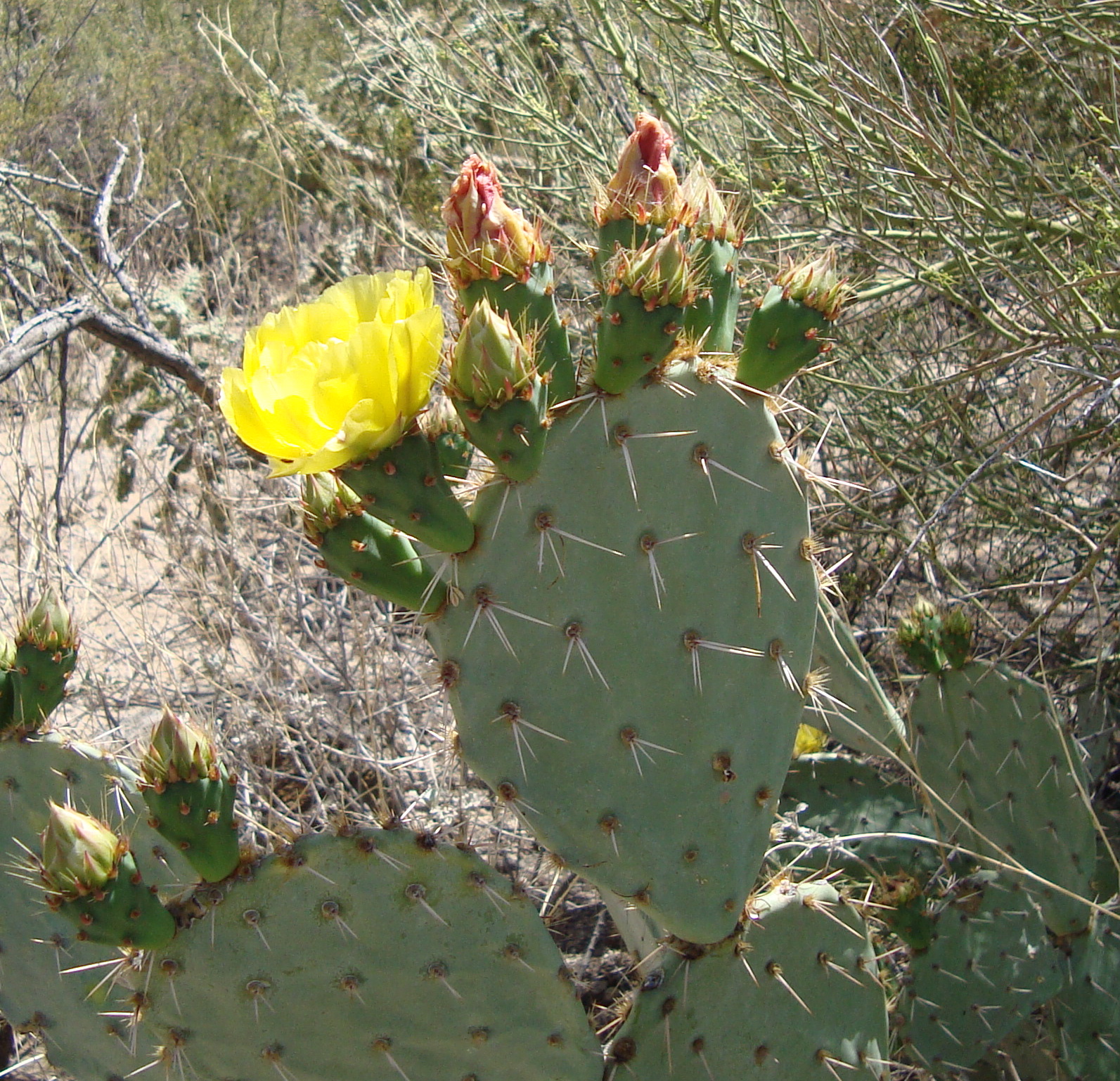
This is where prickly pear jelly comes from. 


This tree smells for all the world like honeysuckle.
"The first recognition of beauty was one of the most significant events in the evolution of human consciousness."


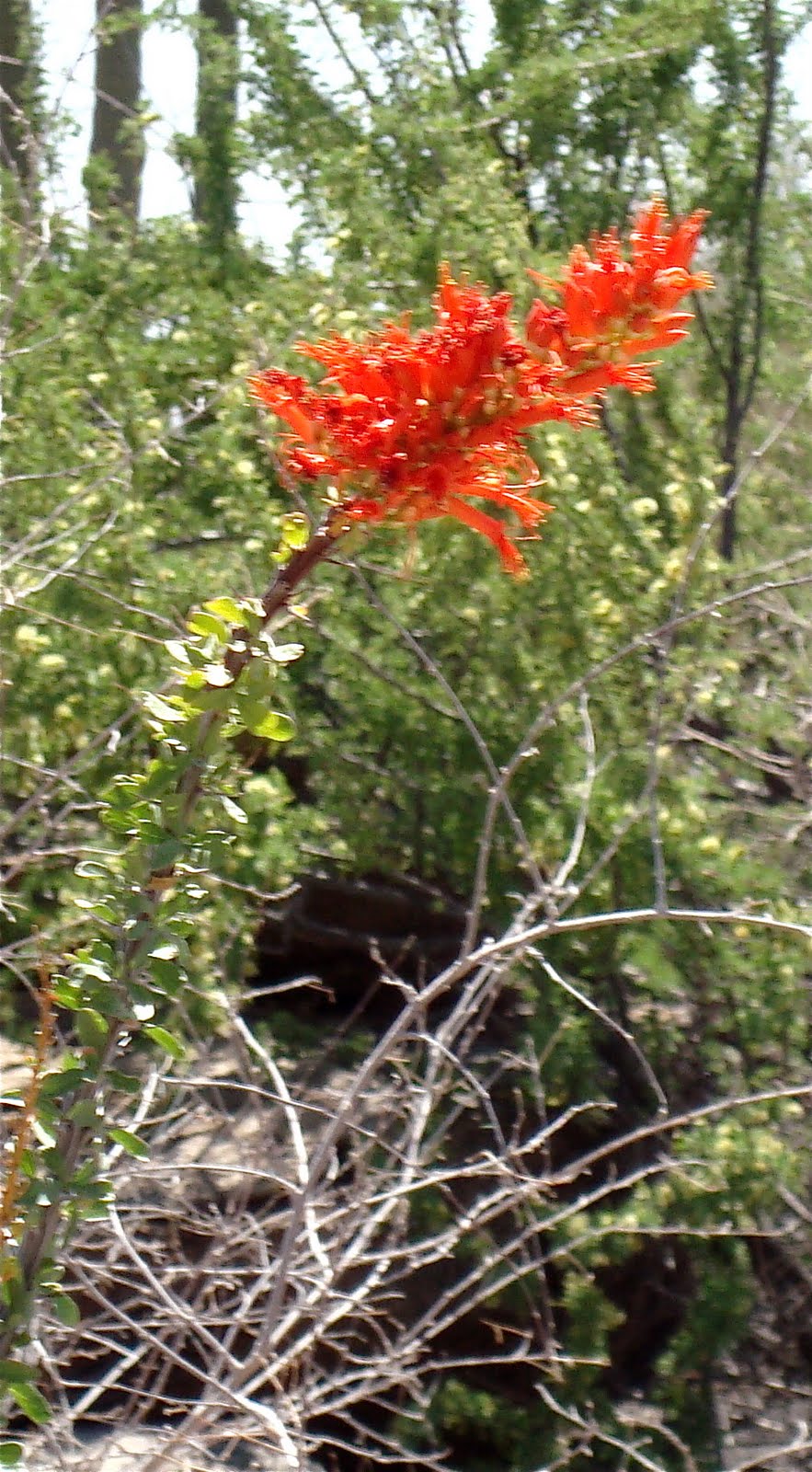
I think the ocotillo blooms were the inspiration for International Caution Orange. 

The mighty Saguaro.

"Flowers, more fleeting, more ethereal, and more delicate than the plants out of which they emerged, would become like messengers from another realm, like a bridge between the word of physical forms and the formless." Eckhart Tolle, A New Earth

The palo verde is beautifully green all year, but in spring it blooms brilliant yellow.

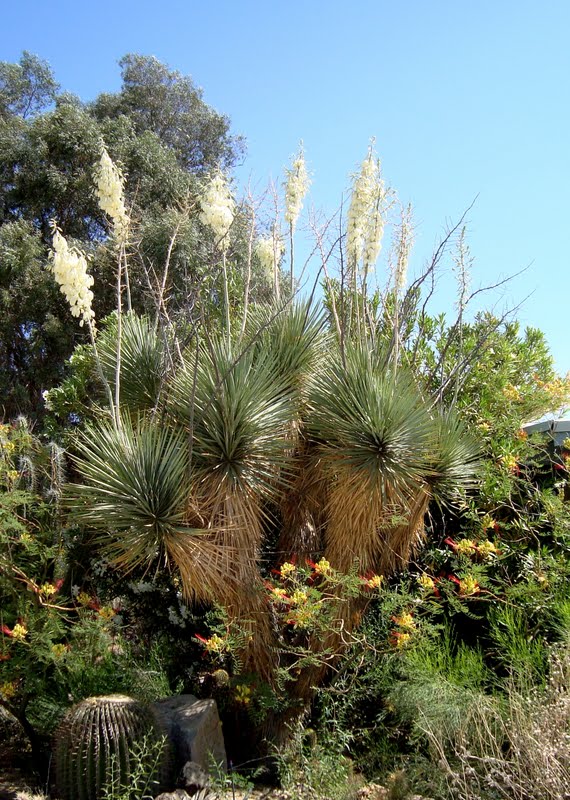
Joshua trees.
Even the severe organ pipe cactus makes dainty little blossoms. 


Different species of barrel cactus.


Don't let the fuzzy appearance fool you!